The Formative Assessment Rubric for Peer Evaluation of Teaching (FARPET) was originally developed in 2020 to meet the need for an effective and evidence-based teaching quality evaluation tool that was both accessible to veterinary educators with limited training for teaching and applicable to hybrid (online / onsite, asynchronous / synchronous) learning environments.
Various tools from medical and higher education were sampled, but none satisfied.
We needed a tool that….
Draws from the multi-disciplinary literature on teaching and learning
Is accessible to educators of all skill and experience levels
Can be completed quickly during peer observations
And to do this without relying on “gut feelings” or sacrificing value for efficiency.
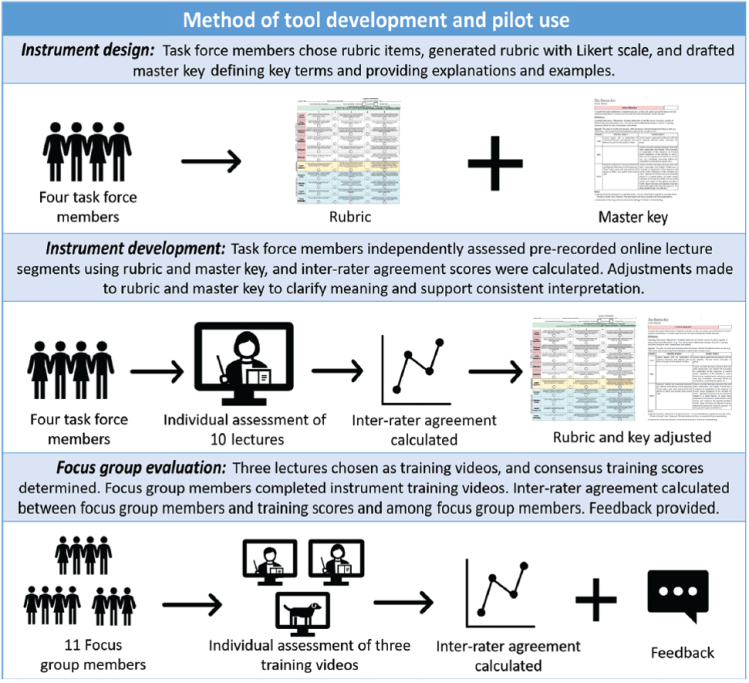
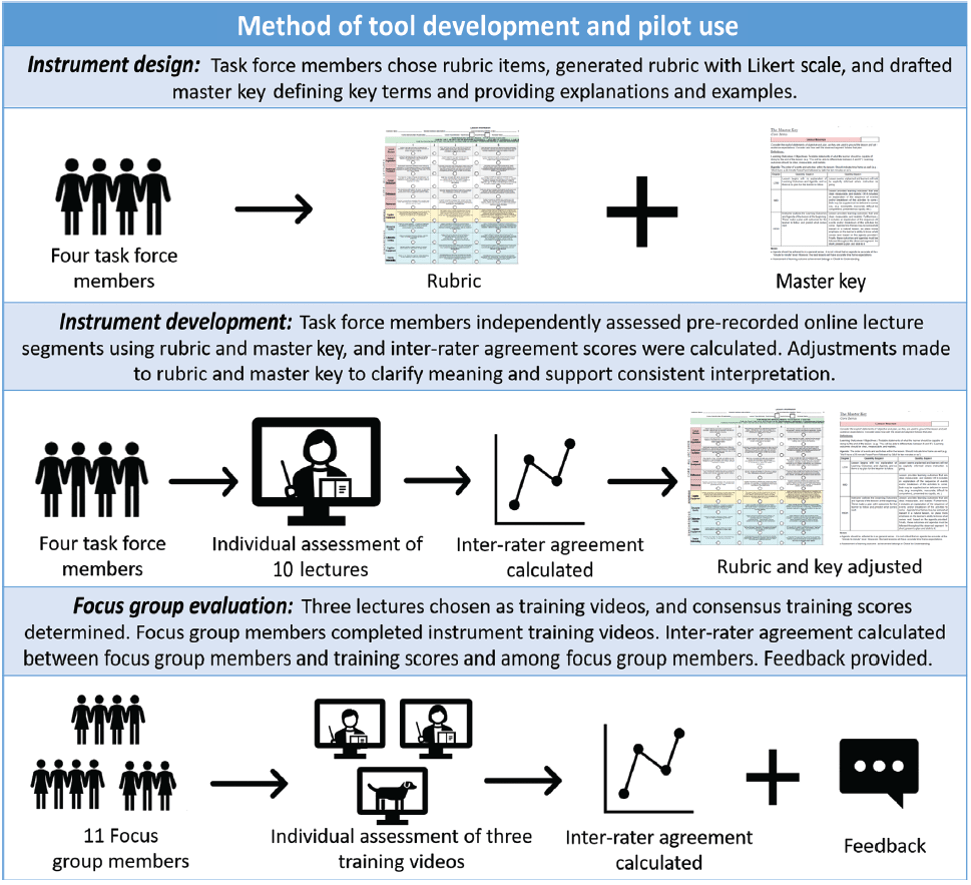
We began by generating a list of criteria for evaluation of teaching steeped in the higher education and medical education literature. That list was then shortened by removing those items that would limit accessibility by requiring observer expertise, did not apply to a broad range of learning environment formats, or complicated interpretation of feedback unnecessarily.
The resulting criteria list was then translated into a rubric with descriptors for observable qualities and we performed a series of observation / revision cycles to iteratively develop the tool’s language, usability, and reliability.
This rubric was then given to eleven focus group members drawn from multiple veterinary education programs, with a wide range of experience and training: some being veterinary doctors, some technician educators, and some education experts. These folks read our instructions for use, then tested the tool out on three videos for part of their frame of reference training.
and it WORKED
Our testers were able to review the lessons and provide valuable written feedback in an efficient manner, regardless of expertise or familiarity with the content, and do so with a high degree of agreement between each other. The FARPET proved fast, effective, and reliable.
You can read more about it in our Journal of Veterinary Medical Education article.
 Formative Assessment Rubric for Peer Evaluation of Teaching (FARPET)